



Before buying an ICU ventilator, define the clinical requirement and verify the exact unit, its condition, the evidence supplied and the arrangements for delivery and local support. Approve the purchase against a written specification that the clinical, engineering and procurement teams have agreed.
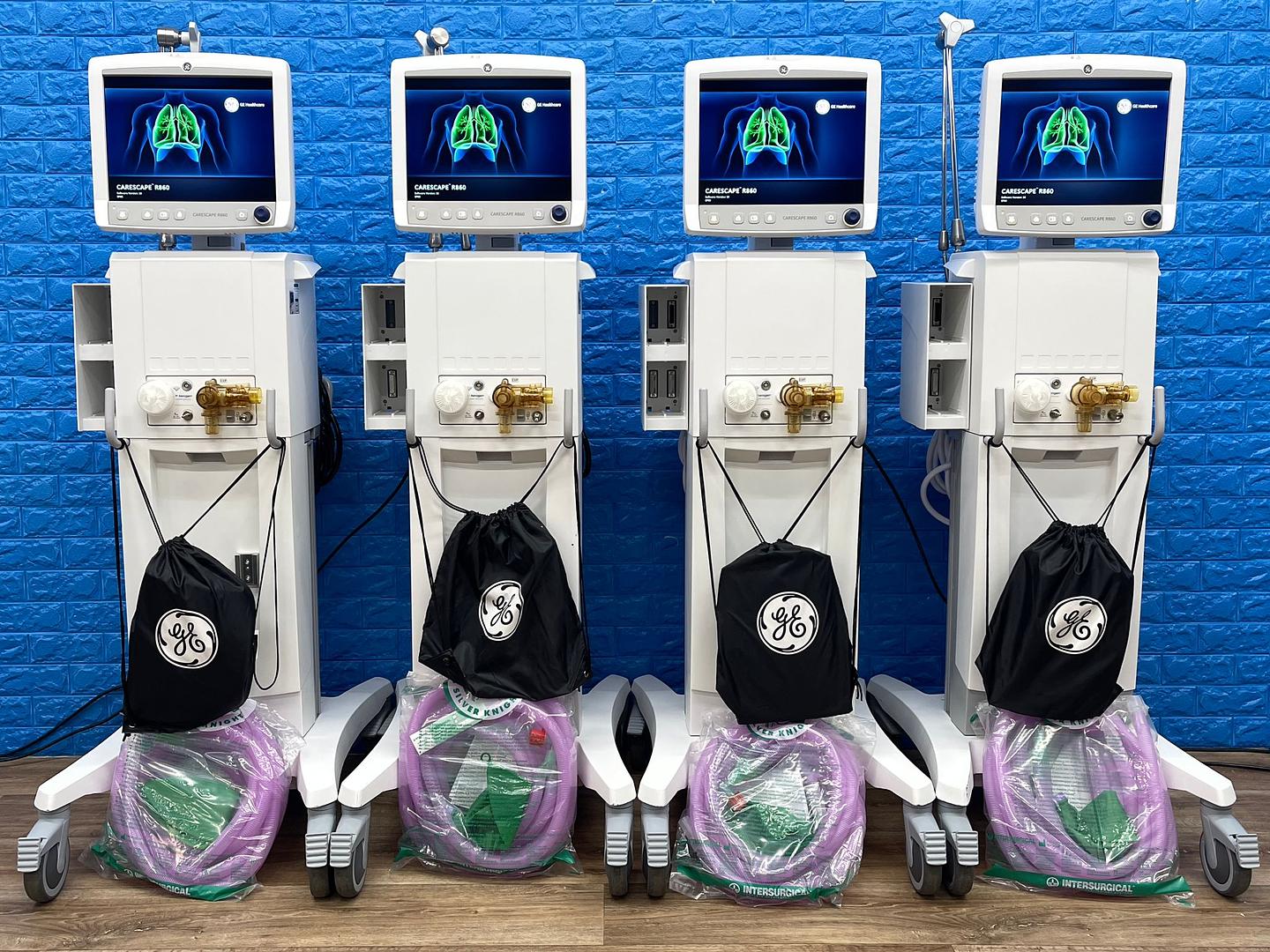
GE CARESCAPE R860 ICU ventilators at Hessen Medical Ltd. Confirm the equipment and accessories included in each individual offer.
For hospitals buying used or refurbished ventilators, the practical question is whether the proposed equipment can meet the department’s requirements and remain supportable throughout its planned use. That assessment involves the receiving hospital as well as the supplier.
This ICU ventilator buying guide explains how to compare offers, recognise missing information and agree the purchase. It includes a documented configuration example from Hessen Medical Ltd and a final 16-point checklist for professional buyers in the UK and internationally.
1. Define the hospital’s clinical and technical requirement
Start with a short specification prepared by the people who will use and maintain the equipment. Identify the patient population, intended critical-care application and essential ventilation and monitoring functions. Treat optional features separately so suppliers can distinguish requirements from preferences.
The specification should also cover:
- Infrastructure: electrical supply, medical-gas requirements, hose connections and any required battery-backed operation.
- Use within the hospital: trolley or mounting needs, space restrictions and any intended movement between departments.
- Integration: connections to existing monitoring or information systems, with input from the hospital’s IT team where relevant.
- Implementation: who will arrange commissioning, user training, consumables and ongoing maintenance.
Check the manufacturer’s intended use for the proposed model and configuration. Equipment grouped together in an online respiratory category may serve different purposes.
The World Health Organization’s procurement and technical-specification guidance explains why specifications should be established before purchase: they inform equipment selection and the resources needed to install, operate and maintain it.
2. Establish exactly what the quotation covers
Ask the supplier to connect the quotation to identifiable equipment. Record the manufacturer, full model, serial number and year of manufacture where available. For a purchase of several ventilators, use a separate record for each unit.
Where the purchase depends on a software option or patient category, request evidence of the installed configuration, such as dated configuration-screen photographs matched to the unit. A product-family brochure describes available capabilities; the offer needs to establish which are present on the equipment being sold.
Mark required items as included, excluded or separately priced. This is particularly useful for trolleys, humidifiers, sensors, reusable breathing-system components, gas hoses and external modules.
The ICU ventilator equipment listed by Hessen Medical Ltd provides a starting point for enquiries. Confirm current availability and the complete scope of supply when requesting a quotation.
A documented configuration example from Hessen Medical Ltd
The published Hessen Medical Ltd listing for a 2019 Dräger Evita Infinity V500, checked on 12 September 2026, identifies this package:
- Dräger Evita Infinity V500 ventilator: REF 8416000; year of manufacture 2019.
- Dräger GS500 gas supply unit: REF 8420790.
- Dräger PS500 power supply unit: REF 8418950.
These three entries give the buyer an itemised basis for comparison. If another quotation says only “V500 ventilator”, clarify whether the GS500 and PS500 are included, separately priced or unnecessary for the hospital’s specification. Compare the offers after that difference has been resolved.
The published package description establishes the listed components. Assessment of installed clinical options, battery performance and technical condition still requires evidence for the actual unit. Request the relevant records before treating the package as ready for the intended deployment.
Source: listing ID 9124780. This is a documented listing example, not a record of a completed hospital purchase or an inspection certificate. Availability may change.
3. Review condition, refurbishment work and service evidence together
Ask for one dated summary covering the unit’s condition, work completed, known defects and supporting records. This keeps the commercial description connected to the technical evidence.
For equipment described as refurbished or reconditioned, the summary should explain the inspection, servicing, repairs, component replacements and testing actually performed. A general condition label does not describe the scope of that work.
The MHRA’s Managing Medical Devices guidance recommends making usage and service history available to prospective buyers of second-hand devices. Its refurbishment guidance also distinguishes routine cleaning and maintenance from full refurbishment involving remanufacture and supply as new, which has additional regulatory implications.
Review maintenance and repair history, fault information, decontamination status and available manufacturer instructions. Check that reports identify the equipment, the organisation carrying out the work and the relevant dates. A statement that a unit “powers on” provides limited evidence about its performance.
Record gaps explicitly. The receiving engineering team should decide what further information or assessment is necessary and whether the purchase can proceed. Check applicable manufacturer safety notices and regulator alerts for the model and affected serial numbers, including evidence of any required corrective action.
4. Confirm that the hospital can operate and maintain the model
Before committing to a platform, ask the proposed maintenance provider whether it can support the exact model in the destination country. Establish parts availability, manufacturer support status and any announced end-of-service dates.
Consider recurring costs and practical dependencies. Compatible circuits, filters, sensors and other consumables need a dependable source. Maintenance may require model-specific documentation, tools or training. An additional ventilator platform can also increase the hospital’s training and spare-parts requirements.
Battery condition deserves a separate check. Original brochure runtime is not evidence of an older battery’s present performance. Request available battery assessment or replacement records and establish the cost and availability of replacements.
For software-dependent functions, confirm installed options and any ownership-transfer or reactivation requirements. Where networking is required, the hospital’s IT and engineering teams should assess software support, connectivity and security requirements before purchase.
Finally, verify electrical and medical-gas compatibility against the manufacturer’s documentation and the receiving facility. Plan any required changes with the responsible technical team.
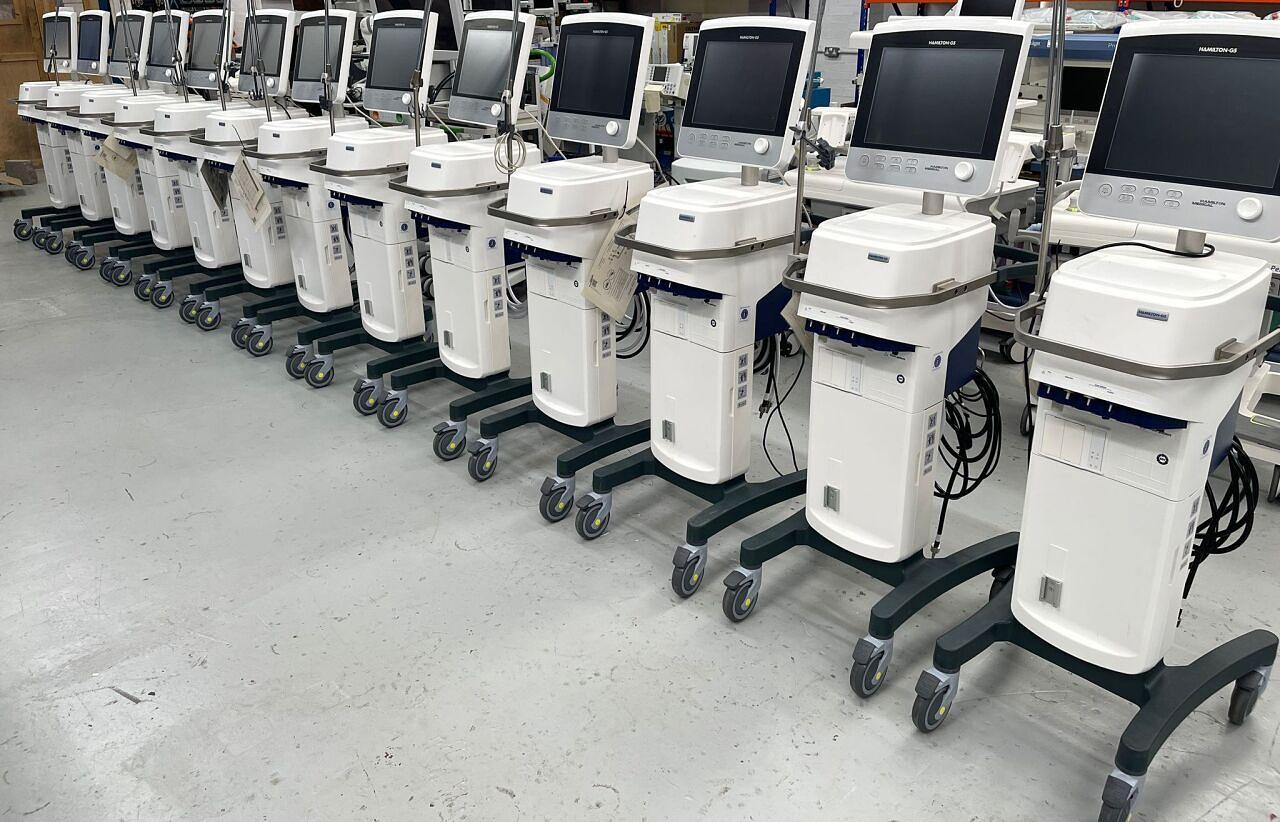
Hamilton G5 ventilator at Hessen Medical Ltd.
5. Check the regulatory requirements for the destination
Identify the destination country and intended transaction before payment and dispatch. Agree who will verify applicable device status, import requirements, labelling and conformity documentation. The assessment must account for the particular device and its market history.
Great Britain means England, Scotland and Wales. The MHRA guidance checked for this revision was last updated on 20 February 2026. It explains the UKCA framework and transitional acceptance of eligible CE-marked devices. For general medical devices, the routes described include:
- EU MDD/AIMDD devices: acceptance until the earlier of applicable certificate expiry or 30 June 2028, subject to the relevant conditions.
- EU MDR devices: acceptance until 30 June 2030, subject to the relevant conditions.
Those dates do not establish eligibility for an individual used ventilator. Northern Ireland has different arrangements. EU and other international destinations require their own assessment. Check the current MHRA regulatory guidance and the destination regulator’s requirements when arranging the transaction.
What the ISO standard establishes
ISO 80601-2-12:2023 addresses basic safety and essential performance for critical-care ventilators and relevant accessories. Referencing it provides technical context; it does not certify a particular used unit, establish that the 2023 edition applies retrospectively to that unit, or demonstrate that acceptance testing has been completed. Review the applicable device-specific conformity evidence separately.
6. Compare the complete cost and agree the sale terms
Ask suppliers to price the same required package. Then compare:
- Equipment and additions: the quoted system plus any missing items needed to meet the specification.
- Preparation and delivery: agreed technical work, packing, freight, insurance and applicable import charges.
- Introduction into service: acceptance checks, installation, configuration and training.
- Ongoing ownership: consumables, preventive maintenance, parts and expected major replacements over the hospital’s chosen planning period.
Keep confirmed costs separate from estimates. An unresolved accessory requirement or unsupported model can change the commercial value of an otherwise attractive offer.
Agree payment milestones and the remedy if delivered equipment differs from the order. Record any warranty period, start date, coverage, exclusions and responsibility for return freight. For an international purchase, establish where warranty work would take place and what happens while the equipment is unavailable.
7. Put international delivery responsibilities in writing
Agree the delivery address, packing method, transport arrangements, insurance and receiving contact. Identify responsibility for export formalities, import clearance, duties, taxes and unloading. Confirm the required documents before dispatch and establish how shortages or transit damage will be reported.
Where Incoterms are used, state the selected rule, named place and edition in the agreement. For buyer-arranged transport, obtain packed dimensions and weight before booking. Agree how the trolley, screen and removable components will be secured and protected.
The Hessen Medical Ltd guide to buying and selling used medical equipment internationally explains these commercial and delivery arrangements in more detail.
For a practical account of international supply, the company’s 500-plus ICU ventilator delivery case study describes equipment sourcing, freight coordination and documentation during the COVID-19 pandemic.
8. Plan acceptance before the equipment arrives
Name the team responsible for receiving, checking and releasing the equipment into service. The MHRA’s device-management guidance recommends checking delivered equipment against the order and retaining records of delivery inspections and relevant safety or functional checks.
Appropriately competent personnel should complete the receiving organisation’s acceptance process using the manufacturer’s instructions and approved procedures. Resolve discrepancies, complete required training and enter the equipment into the hospital’s asset and maintenance systems before clinical deployment.
A supplier’s demonstration or pre-dispatch report supports that process; the receiving organisation still needs to complete its own required checks.
The final 16-point ICU ventilator purchasing checklist
Before issuing the purchase order, record the answer to each question and assign responsibility for any unresolved item.
- Clinical requirement: Does the intended use cover the required patient groups and application?
- Identity: Are the manufacturer, model, serial number and available manufacture date recorded for each unit?
- Configuration: Are the required software version, options and clinical functions confirmed?
- Condition: Are usage information, known defects and limitations documented?
- History: What maintenance, repair, fault and decontamination records will be supplied?
- Refurbishment: Is any claimed refurbishment or reconditioning supported by a scope of work and results?
- Package: Are all included, excluded and separately priced accessories identified?
- Battery: Has battery condition been assessed, and are replacements obtainable?
- Consumables and parts: Can compatible items be sourced in the destination market?
- Maintenance: Is a suitable local service provider available, with support status and servicing needs understood?
- Regulation: Have the applicable destination requirements and conformity documents been assessed?
- Safety actions: Have relevant notices been checked and required corrective actions addressed?
- Infrastructure: Are electrical, medical-gas, mounting and required IT arrangements suitable?
- Commercial terms: Are payment, warranty, returns and discrepancy-reporting arrangements agreed?
- Delivery: Are packing, freight, insurance, customs, taxes and unloading responsibilities documented?
- Acceptance: Who will complete the receiving checks, training and release into clinical service?
Frequently asked questions
Can a demonstration video replace an inspection report?
A video can help show the equipment’s identity, appearance and visible operation. It does not document all required tests, their methods or results. Ask for the evidence needed by the receiving engineering team.
Should multiple ventilators of the same model be treated as an identical batch?
Assess each unit separately. A batch may contain different software, options, batteries or maintenance histories. Use individual serial-number records and identify any exceptions in the order.
Does a low operating-hours figure remove the need for assessment?
No. It is one part of the history. Storage, maintenance, battery ageing and the meaning of the displayed counter also matter. Confirm what the figure represents before using it to compare offers.
Does a battery or trolley make an ICU ventilator suitable for transport?
Check the manufacturer’s intended use and any required configuration for the proposed movement. A trolley or battery alone does not establish suitability for intra-hospital transport or an ambulance environment.
Discuss your ICU ventilator requirement with Hessen Medical Ltd
Browse ICU ventilator equipment from Hessen Medical Ltd and include the listing reference when you enquire.
For a specific model or a purchase involving several units, contact Hessen Medical Ltd with the clinical specification, essential options, quantity, destination and required timeframe. The team can discuss the equipment available and the information needed to prepare an offer.
Email: info@hessenmedical.com
Telephone: +44 7838 577875