



Buying a refurbished anaesthesia machine starts with a clear description of what the operating theatre needs. Confirm the intended patient groups, ventilation functions, vaporisers, monitoring and hospital connections before comparing prices. Then assess the condition, supporting records and service arrangements for the equipment being offered.
A quotation can include a workstation alone, a machine with selected accessories, or a package with a separate patient monitor. Understanding that difference early helps hospitals compare offers and budget for the complete system.
This guide covers the practical decisions involved in buying used and refurbished anaesthesia equipment, including a documented Hessen Medical Ltd package example and a final purchasing checklist.
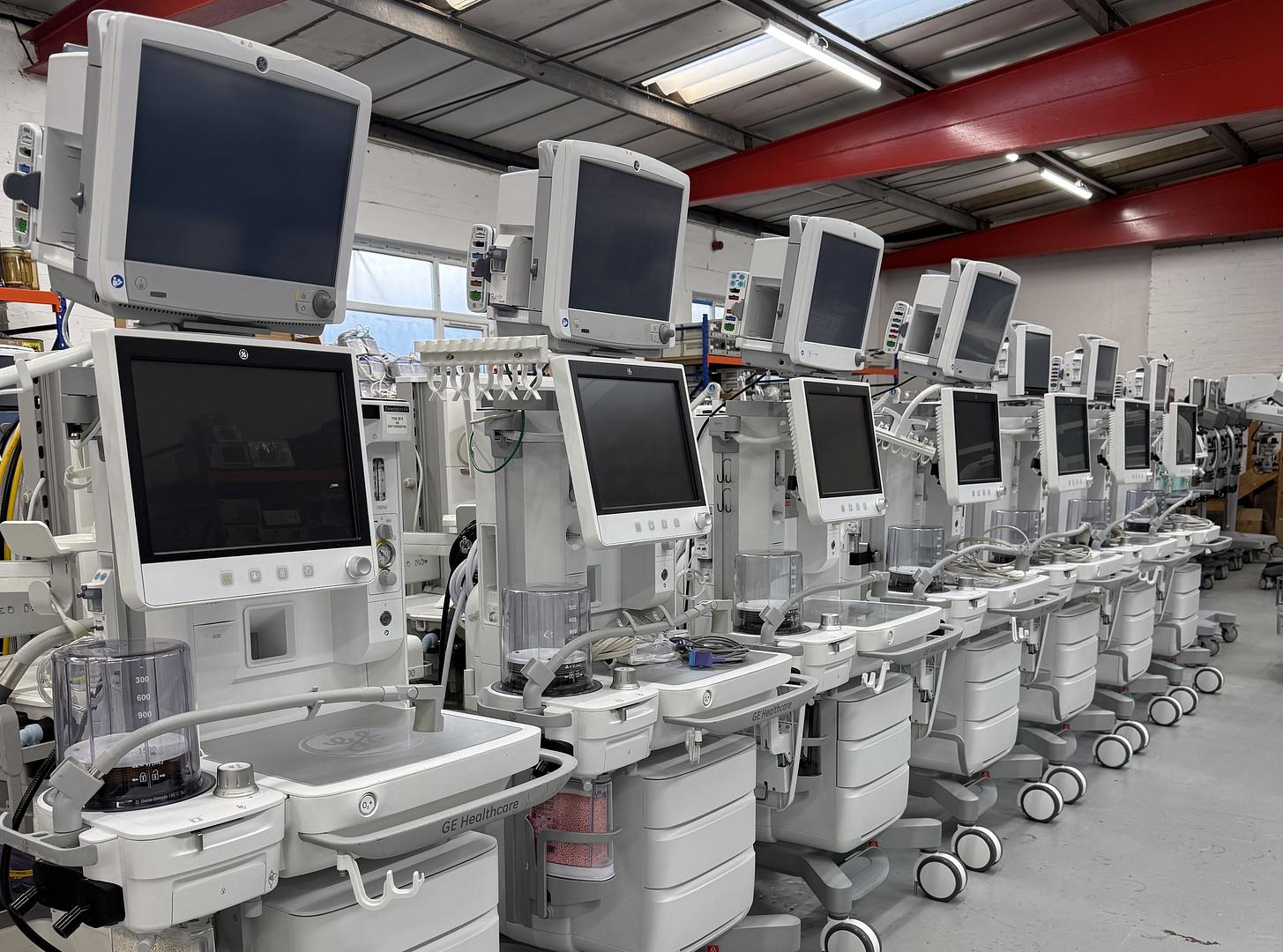
Anaesthesia machines and patient monitors at Hessen Medical Ltd. The equipment included in a sale should be confirmed in the individual quotation.
When is a refurbished anaesthesia machine worth considering?
A used or refurbished workstation may suit a hospital replacing an existing platform, equipping an additional theatre or managing a limited capital budget. Its value depends on whether it meets the clinical specification and can be maintained locally for the planned period of use.
Ask for new and refurbished proposals against the same requirement where both are viable. Compare the configuration, preparation, delivery schedule, warranty and ongoing costs. Faster availability or a lower overall cost should be established from the actual offers.
For a department already familiar with a particular platform, retaining compatible equipment may simplify training and maintenance. That advantage needs to be weighed against the model’s remaining support and the condition of the available units.
You can review anaesthesia machines listed by Hessen Medical Ltd when preparing a shortlist. Confirm the status of a specific unit when you enquire.
Establish what “refurbished” means for the individual machine
The description should explain the work completed on the equipment. Request a dated summary of inspection, servicing, repairs, replacement parts and testing, together with any remaining faults or limitations.
The MHRA’s Managing Medical Devices guidance distinguishes routine cleaning and maintenance from full refurbishment involving remanufacture and supply as new, which carries additional regulatory implications. A commercial refurbishment label alone does not establish that the latter process has taken place.
Keep the condition description connected to identifiable equipment: model, serial number, manufacture date where available and the records supplied with it. Ask for the scope of work separately for significant components, such as a vaporiser or patient monitor, where they form part of the package.
Specify the complete anaesthesia workstation
Agree the specification with the anaesthetic department, biomedical or clinical engineering team and the staff responsible for theatre infrastructure.
Cover four areas:
- Clinical application: intended patient groups, procedures and required ventilation and monitoring functions, within the manufacturer’s specified use.
- System configuration: breathing system, vaporisers, gas analysis, patient monitoring, installed software and required options.
- Theatre installation: medical-gas supplies, scavenging interface, electrical supply, backup arrangements, space and mounting requirements.
- Practical support: local maintenance, compatible consumables, cleaning requirements, user training and access to the relevant instructions.
Where a purchase depends on an option, request evidence from the proposed unit. The capabilities available across a product family may exceed those installed on a particular machine.
A documented Hessen Medical Ltd package example
The published Hessen Medical Ltd Fabius Tiro and GE B650 listing, checked on 12 September 2026, identifies:
- A Dräger Fabius Tiro anaesthesia machine, year of manufacture 2011.
- A GE B650 patient monitor, year of manufacture 2013.
- SpO₂ and ECG cables in the included-equipment description.
That gives a buyer a useful basis for comparing a package with an offer for a machine alone. The next step is to establish the monitor’s installed modules, the required gas measurements, the complete accessory inventory and the applicable service evidence.
The presence of a patient monitor and specified cables does not, by itself, establish that all required anaesthesia monitoring is included. Record any additional items needed to meet the theatre’s specification before comparing the quotations.
This example documents the published package under listing ID 8933956. It is not a completed customer quotation or a unit inspection record. Current availability and the final scope of supply require confirmation.
Check vaporisers, gas analysis and patient monitoring separately
Vaporisers and agent compatibility
Identify the intended anaesthetic agents and the compatible delivery equipment required by the clinical team. For a vaporiser included in an offer, establish its model, agent designation, mounting arrangement, filling system and available service or performance-check records.
Check compatibility against the workstation and vaporiser manufacturers’ information. Confirm whether mounting hardware, filling accessories and any required electrical connections form part of the offer. Physical appearance or a similar-looking fitting is insufficient evidence of compatibility.
The anaesthetic vaporiser listings can help identify equipment for enquiry. Ask for the exact specification when matching a vaporiser to an existing machine.
Gas analysis and patient monitoring
Specify the required measurements and identify which device or module provides each one. Check oxygen measurement, capnography and anaesthetic-agent analysis as applicable, alongside the patient-monitoring requirements set by the anaesthetic team.
For separate monitoring equipment, establish the installed modules and the necessary sensors, cables, sampling lines, water traps and compatible consumables. An advertised monitor model does not identify every fitted option.
The Association of Anaesthetists’ 2021 monitoring recommendations address monitoring during anaesthesia and recovery, including capnography and monitoring associated with inhaled agents. They are primarily directed at UK and Ireland practice; the Association currently marks this guidance as under review. The receiving clinical team should apply the current requirements relevant to its practice and location.
Where monitoring is being sourced separately, review the patient monitors available from Hessen Medical Ltd against that agreed requirement.
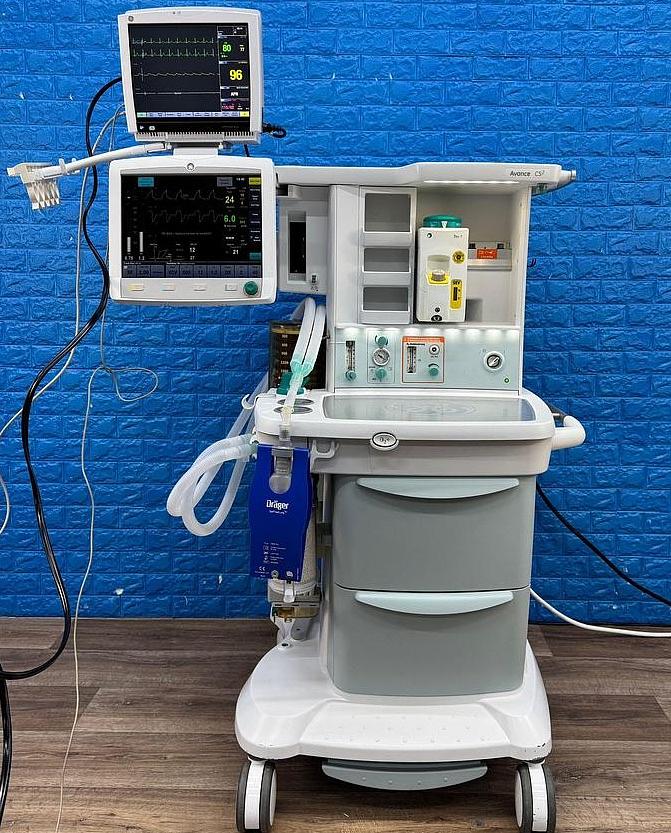
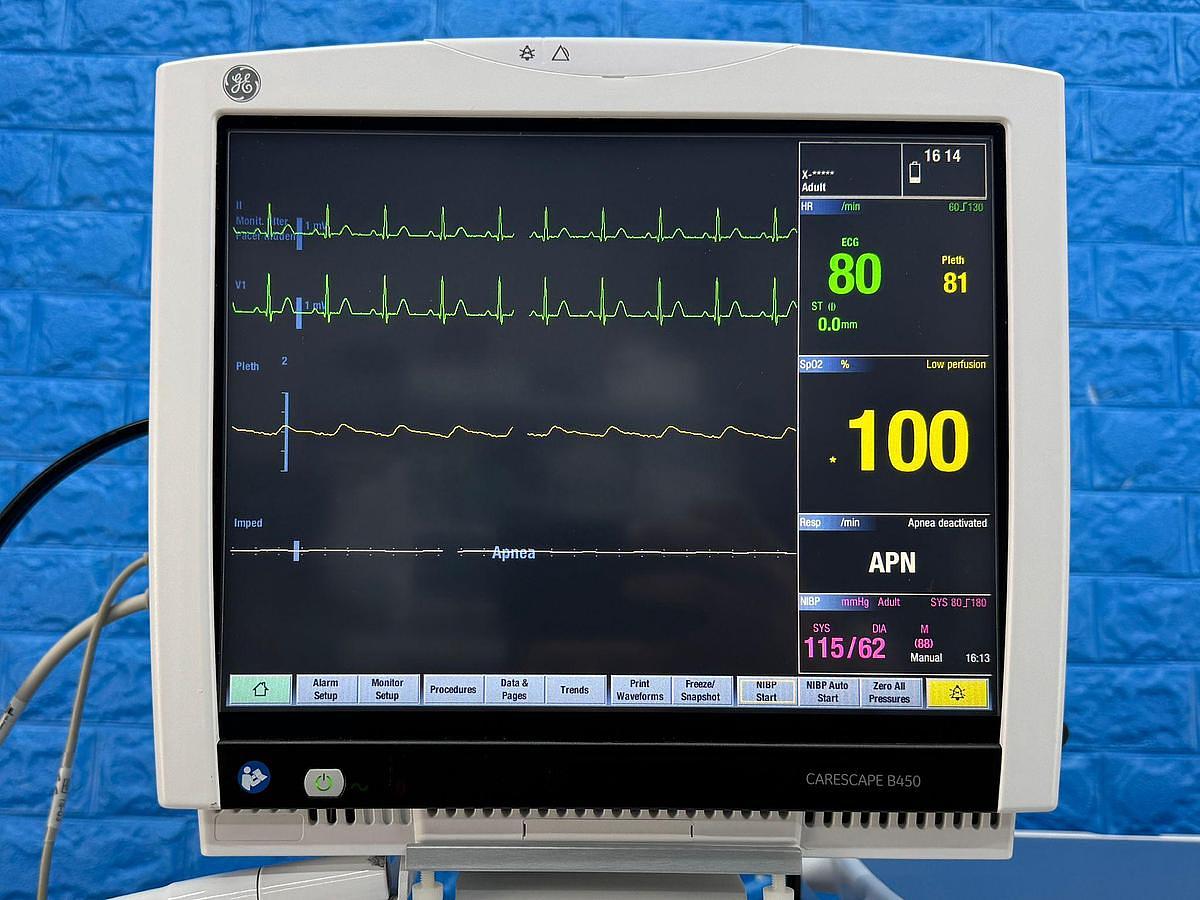
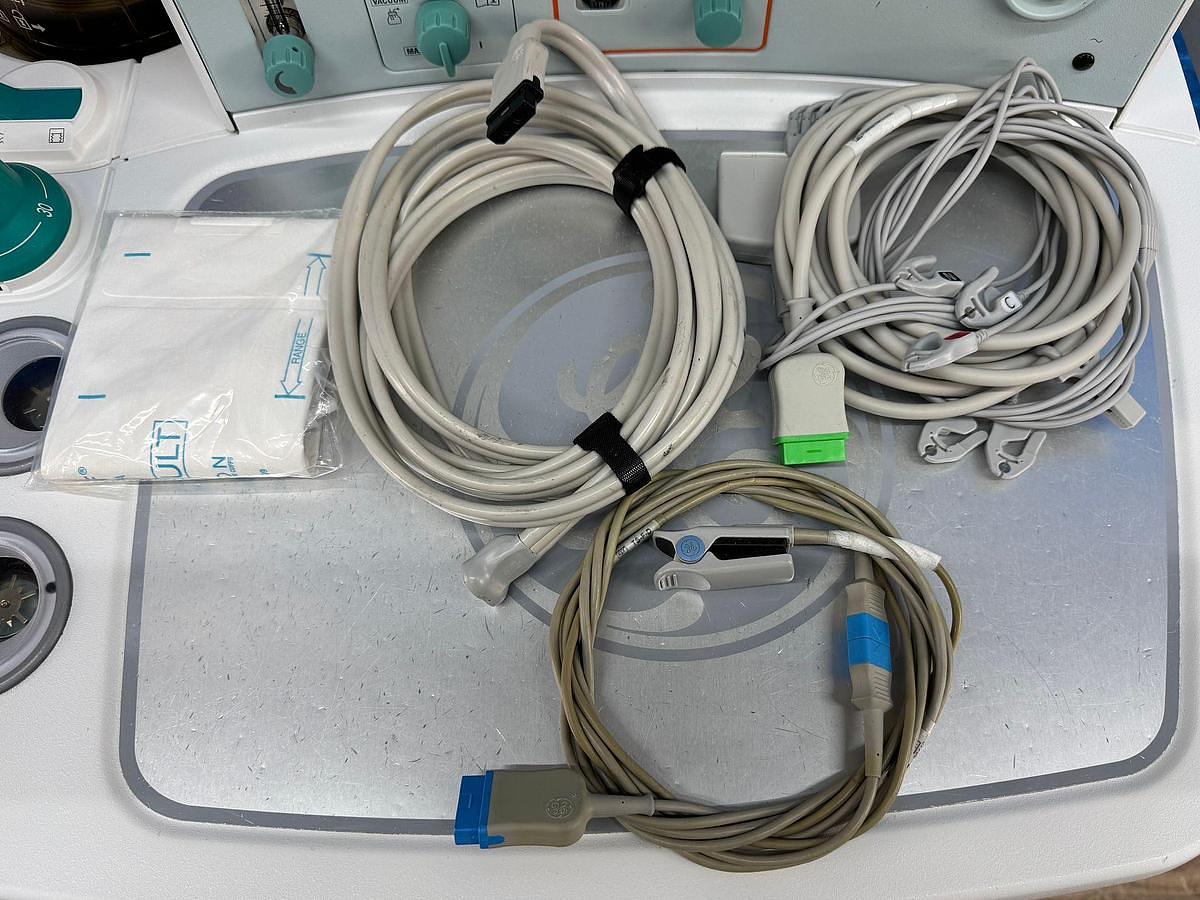
GE anaesthesia equipment with a separate patient monitor. Confirm installed monitoring options and supplied accessories for the proposed unit.
Confirm breathing-system, gas-supply and scavenging requirements
Ask the receiving technical team to assess the workstation against the theatre installation before ordering.
Breathing system. Identify the required breathing-system assembly, reusable components, absorber arrangement, sensors and compatible circuits. Confirm that replacement consumables and the resources needed for cleaning or reprocessing are available locally.
Medical-gas supply. Compare the machine’s specified gases, supply requirements, hose connections and any cylinder arrangements with the receiving facility. If a model uses an electrically driven ventilator, the hospital still needs to establish the complete workstation’s gas requirements.
Anaesthetic gas scavenging system (AGSS). Confirm the required interface and its compatibility with the hospital’s waste-gas disposal installation. Ask the estates or engineering team to assess the complete arrangement, including any missing connections or components.
Electrical supply and backup. Check the specified electrical requirements and available evidence of battery condition. Agree any necessary preparation before dispatch and the checks required after installation.
Treat these as installation questions to resolve with the responsible professionals and manufacturer documentation. A change of plug or connector does not establish suitability of the complete system.
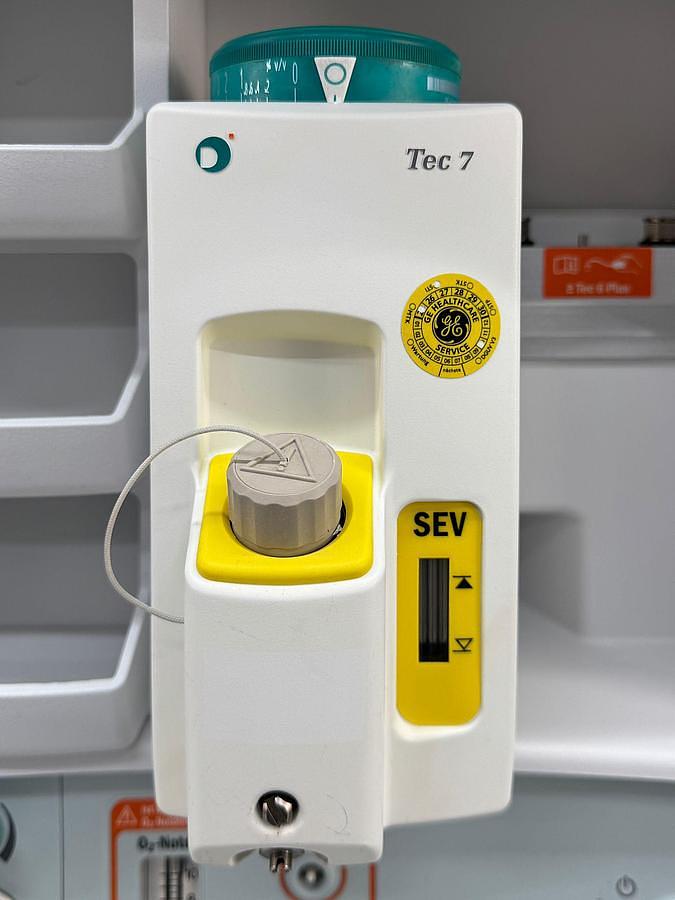
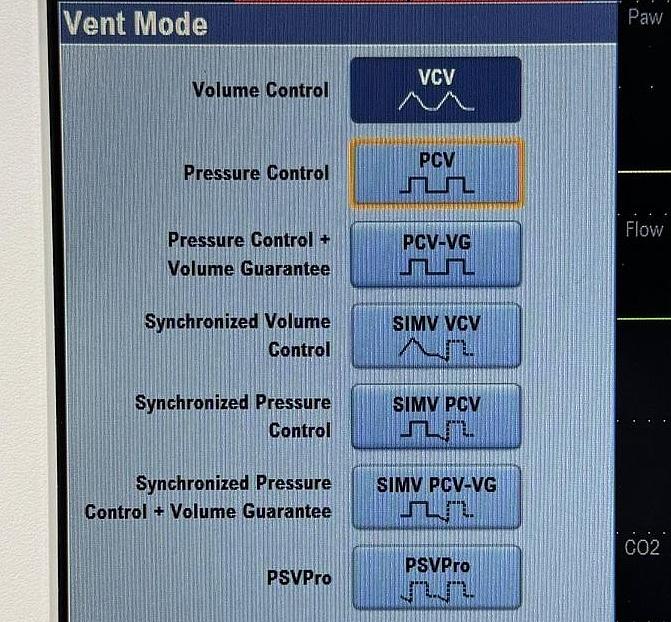
GE Avance CS2 anaesthesia workstation at Hessen Medical Ltd. Check the workstation, vaporiser and monitoring configuration together when assessing an offer.
Review service history and remaining support
Request maintenance, repair, fault and decontamination records, together with the manufacturer instructions relevant to the model and configuration. Reports should identify the equipment, the work performed, the responsible service organisation and the date.
If records are incomplete, document the gap and refer it to the receiving engineering team. That team should decide what further evidence or assessment is needed. A current demonstration can support an enquiry, but it cannot reconstruct an undocumented service history.
Check manufacturer safety notices and regulator alerts for the model and affected serial-number range. Where corrective action applies, ask for evidence of its completion.
Support status also needs a direct enquiry. For example, the Dräger UK Fabius Tiro page is marked “End of Sales”. That statement does not specify an end-of-service date. Buyers considering the platform should establish current parts and service arrangements for their destination.
Before purchase, identify the organisation that will maintain the machine and confirm its capability to support the configuration. Include planned servicing, major replacement items, technical documentation and expected response arrangements in the assessment.
Compare the total cost and agree the commercial terms
Build the comparison around the hospital’s required package. Include:
- Equipment and any additional vaporisers, modules, accessories or mounting parts.
- Agreed servicing, repairs or technical preparation before dispatch.
- Packing, freight, insurance, customs handling and applicable duties or taxes.
- Installation, acceptance checks, configuration and user training.
- Maintenance, consumables and anticipated replacements over the planned period of ownership.
Keep confirmed prices separate from estimates. If an essential item remains unidentified, show it as an unresolved requirement rather than assigning it a zero cost.
Ask for payment terms, delivery responsibilities and the process for reporting discrepancies in writing. Record any warranty period, start date, coverage, exclusions and responsibility for return freight. International buyers should establish where warranty work would take place and how the arrangement would operate in practice.
Check destination rules and plan international delivery
Confirm which regulatory and import requirements apply to the particular equipment and transaction before payment and shipment. Ask the responsible importer or regulatory adviser what identification, conformity, labelling and other documentation is needed, then establish what is available for the unit.
For Great Britain—England, Scotland and Wales—the MHRA regulatory guidance, last updated 20 February 2026 when checked for this revision, explains the UKCA framework and transitional acceptance of eligible CE-marked devices. Eligibility depends on the device, conformity route and applicable conditions. Northern Ireland has different arrangements, and other destinations require their own assessment.
A conformity mark or supplier statement should not be treated as blanket permission to import a used workstation into every country.
For delivery, agree the packing method, transport, insurance, customs responsibilities and receiving arrangements. Obtain packed dimensions and weight where the buyer books freight. Preparation of vaporisers, cylinders, batteries and removable components should follow the relevant manufacturer and carrier requirements.
The Hessen Medical Ltd guide to buying and selling used medical equipment internationally covers the commercial and delivery arrangements in more detail.
Standards provide context; the equipment still needs its own evidence
ISO 80601-2-13:2022 covers basic safety and essential performance of anaesthetic workstations and relevant components. ISO also lists Amendment 1:2026.
Citing the standard does not establish conformity of an individual used machine, prove that a later edition applies retrospectively to it, or replace the receiving hospital’s acceptance process. Assess the applicable documentation and evidence for the proposed equipment.
Arrange acceptance and training before clinical use
Agree who will receive the workstation, check the delivery and complete the hospital’s acceptance and commissioning process. Match the equipment and included items to the order and resolve discrepancies before deployment.
The MHRA’s medical-device management guidance recommends retaining records of delivery inspections and relevant safety or functional checks.
Appropriately competent personnel should determine and complete the necessary checks using the manufacturer’s instructions and the organisation’s approved procedures. Confirm user training, access to instructions, asset registration and the maintenance schedule. Technical acceptance and routine pre-use checks have separate roles; both need to be addressed in the hospital’s arrangements.
Final checklist before buying an anaesthesia machine
Use this checklist when reviewing the quotation. Assign each unresolved point to the person responsible for answering it.
- Clinical use: Are the patient groups, procedures and essential functions agreed?
- Identity: Are the model, serial number and available manufacture date recorded for each unit?
- Configuration: Are the required software, options and ventilation functions confirmed?
- Vaporisers: Are agent designation, compatibility, filling arrangements and records established?
- Gas analysis: Is the equipment for the required oxygen, CO₂ and agent measurements identified?
- Patient monitoring: Are the necessary monitor, modules, sensors and accessories included or separately arranged?
- Breathing system: Are the required assemblies, components and consumables specified?
- Infrastructure: Are medical-gas supply, scavenging and electrical arrangements compatible?
- Condition: Are known defects, limitations and any refurbishment work documented?
- Records: What service, repair, fault and decontamination evidence will be supplied?
- Safety actions: Have applicable notices and corrective actions been addressed?
- Support: Can the model be maintained locally, with suitable parts and consumables available?
- Regulation: Have the destination requirements and available conformity documents been assessed?
- Cost and terms: Are additional costs, payment, warranty and returns understood?
- Delivery: Are packing, freight, insurance, customs and unloading responsibilities agreed?
- Acceptance: Who will complete receiving checks, commissioning, training and release into service?
Frequently asked questions
Can we use our existing patient monitor with another anaesthesia machine?
Possibly, subject to assessment of the complete arrangement. Confirm the required measurements, fitted modules, mounting, accessories and any data connections with the responsible clinical and engineering teams. Compatibility needs to be established for the actual equipment.
Does a successful automatic self-test mean the machine is ready for use?
A self-test addresses the checks specified by its manufacturer. The hospital must still complete its applicable acceptance, installation and pre-use procedures, including checks involving the assembled system and external equipment.
How should we assess several machines offered as a batch?
Keep a separate identification and configuration record for each machine. Manufacture dates, software, accessories and service history may differ. Record any exceptions before agreeing the order.
Can we enquire about a model that is not currently listed?
Yes. Send Hessen Medical Ltd the manufacturer, model or required specification, quantity, destination and timeframe. The team can discuss the requirement and sourcing possibilities, subject to availability.
Request an anaesthesia equipment quotation from Hessen Medical Ltd
Browse anaesthesia machines from Hessen Medical Ltd and include the listing reference in your enquiry.
For a complete theatre requirement or a purchase involving several machines, contact Hessen Medical Ltd with the intended patient groups, essential functions, vaporisers, monitoring needs, quantity and destination. Include any equipment you intend to retain so the proposed package can be discussed in context.
If the project also involves releasing existing equipment, submit the details through the sell medical equipment page for consideration.
Email: info@hessenmedical.com
Telephone: +44 7838 577875