



Before an international equipment sale, agree the exact unit and accessories, evidence of condition, total price, payment terms, available documents and responsibility for delivery. Buyers also need a plan for installation and ongoing support; sellers need a clear arrangement for release and collection.
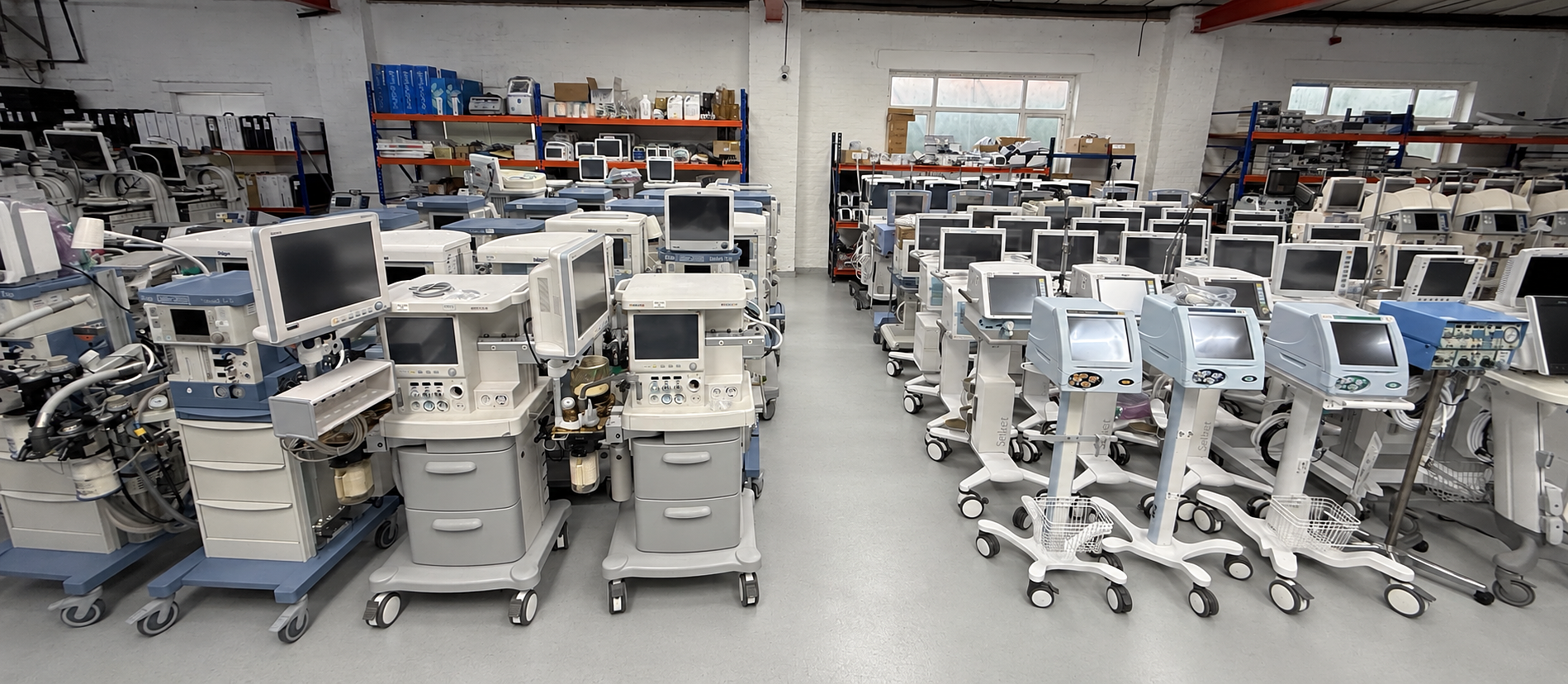
Anaesthesia machines and ventilators at Hessen Medical Ltd.
A clinic may find the ultrasound model it needs at an attractive price, then discover that the required probe is outside the quotation. A hospital may agree to sell a group of monitors, only to find that the collection plan does not account for equipment still in use.
These are practical details that belong in the agreement from the beginning. Across an international transaction, they affect the value of the equipment, the work required and the date it can be handed over.
Hessen Medical Ltd is based in Oldham, Greater Manchester. We supply medical equipment internationally and purchase selected surplus equipment from professional organisations. This guide brings the buying and selling process together, with particular attention to configuration, service support, documentation and handover.
How to buy used medical equipment internationally
Start with a short specification for the equipment your organisation needs. Include its intended application, essential functions, quantity, delivery country and required timeframe. Where you have a preferred manufacturer or model, explain which features make it suitable.
If the purchase must work with an existing system, provide the model and reference numbers of the components you plan to retain. Compatibility should be checked against the manufacturer’s documentation, with clinical engineering input where appropriate.
When reviewing our used medical equipment for sale, include the listing reference in your enquiry. Ask whether the quotation relates to the photographed unit and request its identification details. For a purchase involving several devices, ask for an itemised schedule.
Choose a supplier who can explain the scope of the offer and identify outstanding questions before payment. Our guide to choosing a global medical equipment supplier covers supplier assessment, communication and delivery support in more detail.
Confirm the configuration and included accessories
A model name describes a product family. The quotation needs to describe the equipment you will receive.
For example, two ultrasound quotations may include the same console but different probes and software options. Compare the price of the complete configuration your department requires, including any components that must be sourced separately.
Equipment Details to confirm in the quotation
Ultrasound systems Console identification, each probe model, installed options and the reported condition of the console and probes.
Endoscopy equipment Processor, light source, scopes, camera components, monitor and compatibility across the proposed system.
Patient monitors Measurement options, modules, cables, sensors, battery information and mounting accessories where included.
Anaesthesia machines Workstation configuration, included vaporisers, accessories and installation requirements for engineering review.
ICU ventilators Installed options, accessories, battery information and available maintenance records for each unit.
Electrosurgical units Generator identification, footswitches, cables and compatibility with the intended instruments.
Have optional extras and exclusions listed separately. If an accessory is shown in a photograph but is essential to your purchase, make sure it also appears in the written offer.
For more detailed assessments, see our anaesthesia machine buying guide and ICU ventilator buying guide.
Assess condition through records and inspection
The terms “used”, “tested” and “refurbished” need a clear explanation for the individual unit. Ask what work has been completed, what evidence is available and which limitations remain.
Useful supporting information includes:
- Recent photographs of the actual equipment, identification labels and accessories.
- Available inspection or test records showing the unit assessed, date, scope and findings.
- Details of repairs or refurbishment, including components replaced where recorded.
- Known faults, error messages, cosmetic damage and missing parts.
- Available service history, maintenance information and operating hours where recorded and relevant.
A photograph of a system switched on can help identify its configuration. Assessment of its functions requires appropriate checks and supporting information. Where a demonstration is available, agree what it will cover and how the findings will be recorded.
The MHRA distinguishes fully refurbished devices from those that have undergone repair or maintenance. Its guidance on second-hand and fully refurbished medical devices explains the distinction in the Great Britain regulatory context. For any offer described as refurbished, establish exactly what that description means for the equipment being supplied.
Warranty and return arrangements also belong in the quotation. Check any coverage offered, its duration, exclusions, the reporting procedure and responsibility for return transport.
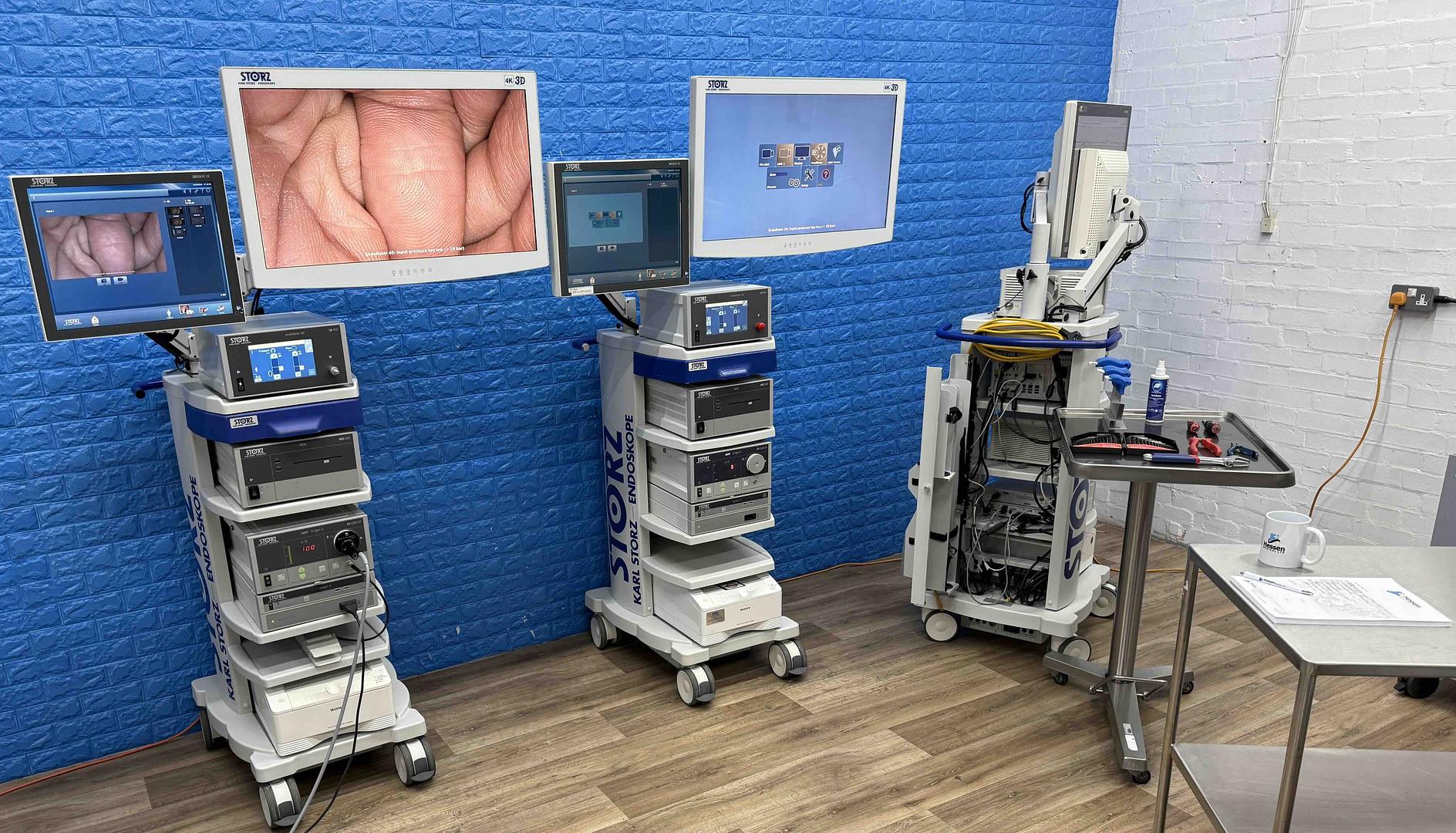
Karl Storz endoscopy systems and accessories at Hessen Medical Ltd.
Check service support, software and connectivity
Consider how the equipment will be supported after delivery. Identify who can maintain the exact model in the destination country and ask about the availability of parts, consumables and relevant technical support.
Software deserves a separate check. Record the installed version and required options, then establish whether licences, access rights or subscriptions require action when ownership changes. Have any proposed transfer or reactivation confirmed with the relevant provider.
For equipment that connects to a hospital network or exchanges patient information, involve the receiving organisation’s IT and clinical engineering teams before purchase. They should review integration requirements, supported software and security updates for the proposed installation.
If an endoscope needs assessment or repair, our endoscopy repair service provides a starting point for discussing the model, reported fault and available options. Establish the scope and likely next steps before including that work in a purchasing budget.
Compare the total cost of the purchase
An equipment price is one part of the budget. A useful comparison accounts for the cost of receiving the complete system and preparing it for use.
Separate the quotation into three areas:
- Equipment: the unit, included accessories, additional components and any agreed work before dispatch.
- Delivery: packing, freight, insurance, customs clearance and applicable import charges, with responsibility for each cost identified.
- Introduction into service: installation, acceptance checks, any required training and initial maintenance arrangements.
Ask for the payment currency, applicable transaction charges, quotation validity and conditions affecting availability. If delivery or installation is being arranged separately, obtain those estimates before approving the overall budget.
This makes it possible to compare offers on a consistent basis and recognise where a lower initial price comes with additional work or expense.
Agree shipping and import documents before dispatch
Provide the destination country, delivery address and receiving contact early. Your importer or customs agent should confirm the requirements for the specific device, its condition and intended use.
Depending on the destination and transaction, documents to discuss may include a commercial invoice, packing list, transport document, product identification, manufacturer’s declaration of conformity or relevant registration evidence. Establish which documents are required and which are available for the exact equipment before committing to shipment.
The delivery agreement should identify who arranges freight, export formalities, import clearance, insurance and unloading. If it uses an Incoterms rule, record the rule, named place and edition, and make sure both parties understand the responsibilities. The International Chamber of Commerce’s Incoterms guidance explains the trade terms and their use.
For packing, discuss how the main unit and accessories will be protected. Confirm whether the agreed price includes protective packing, a pallet or a crate, and obtain packed dimensions and weight when arranging freight.
Site access matters too. Tell the supplier about loading restrictions, lifts, narrow entrances, delivery appointments or unloading equipment needed at the receiving location.
Our published account of international ICU ventilator deliveries during COVID-19 describes Hessen Medical Ltd’s work coordinating equipment supply and freight during a period of significant demand.
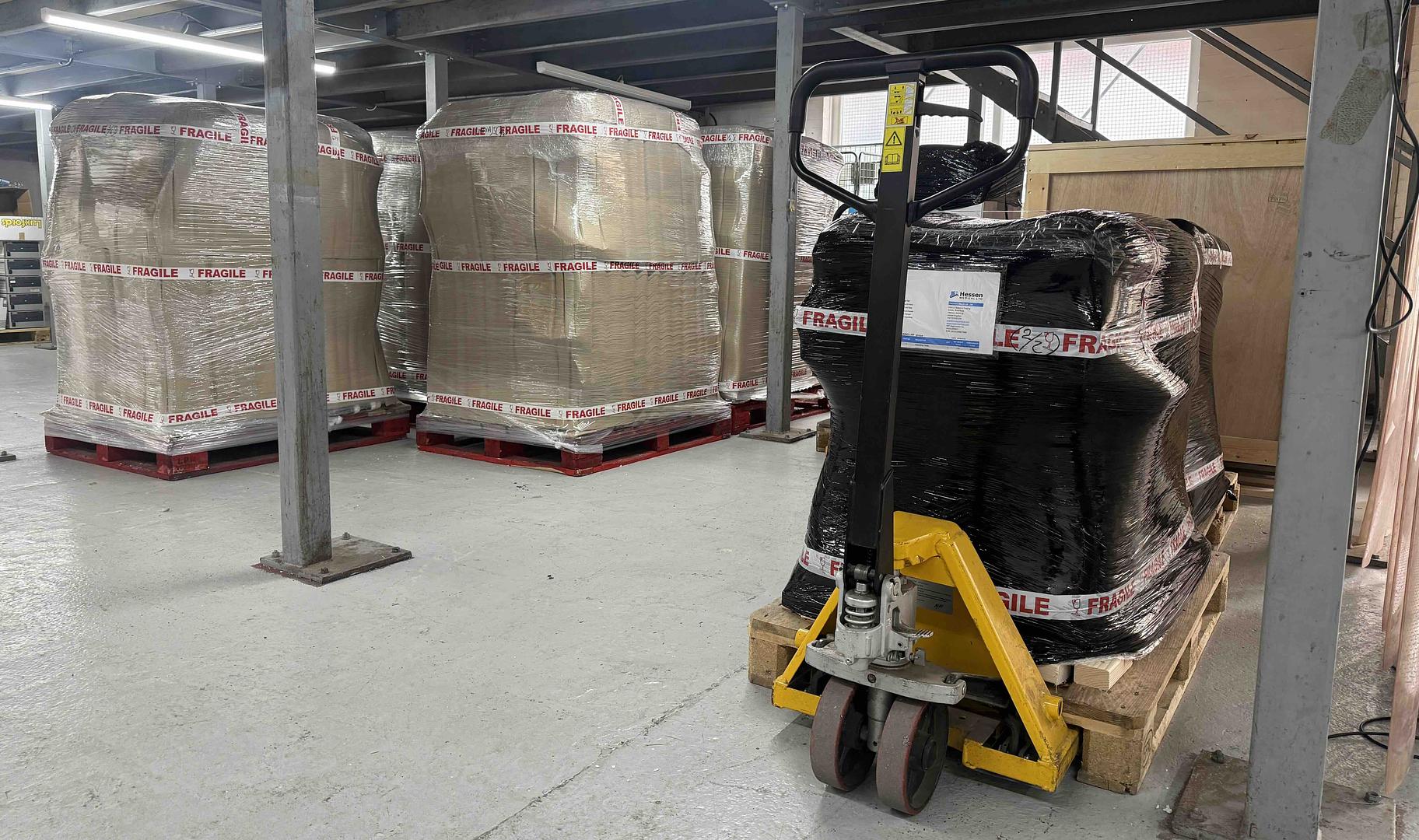
Medical equipment packed on pallets at Hessen Medical Ltd.
How to sell surplus medical equipment
A useful equipment inventory gives a buyer enough information to assess both the stock and the work involved in collecting it. This applies to a single device, a department upgrade or a group of equipment returning from lease.
For each item, include the manufacturer, model, serial number, quantity, location and year of manufacture where known. Add the accessories, available service history and a clear description of its present condition.
Be specific about what you know. “Removed from use in July and stored since; current function not assessed” is more informative than an unsupported statement that equipment is in good condition. Identify known faults, missing parts and any restrictions on inspection or collection.
Photographs should show the whole unit, its identification label, accessories and visible damage. Keep loose components labelled and associated with the correct system. Before separating a complete package, establish whether the accessories are needed for the buyer’s intended configuration.
Equipment value depends on the model, age, condition, configuration, support availability and current demand. Collection requirements and work needed before resale also affect the assessment. The original purchase price alone does not establish what the equipment is worth today.
Hessen Medical Ltd purchases selected equipment from hospitals, clinics, leasing companies, biomedical service providers and distributors. Use our sell used medical equipment page to submit an inventory and photographs. The team will review suitability and discuss an offer, collection and payment where a purchase can be agreed.
Set clear payment, collection and handover terms
For sellers, record the agreed purchase amount, any deductions or separately charged work, the payment timetable and the conditions for releasing the equipment. For buyers, confirm what must happen before dispatch and which documents accompany the shipment.
Identify the person authorised to approve the sale and the person responsible for handover. Explain whether the equipment is still installed, disconnected or in storage, and agree who will organise any specialist removal or loading.
Before releasing equipment, the selling organisation should complete its required decommissioning and decontamination processes. Where equipment stores personal information, involve the responsible information governance and engineering teams to arrange any required retention and secure data removal, using a process appropriate to the device. Keep evidence of completion. The ICO’s data security guidance provides the broader UK framework for protecting personal information.
At collection, reconcile the equipment and accessories against the agreed inventory and record any differences. On receipt, arrange the appropriate acceptance checks and approval by the responsible clinical and engineering teams before clinical use.
Before you approve the sale
Use these five questions to review the final agreement:
- What is changing hands? The exact units, identification details, accessories and exclusions are recorded.
- What is known about condition? Available evidence, completed work and known limitations are documented.
- What will each party pay? The price, payment schedule, delivery costs and any additional work are clear.
- Who is responsible for each stage? Documents, packing, customs, collection, delivery and acceptance have named owners.
- What happens if there is a problem? The agreed reporting process, warranty or return terms, where offered, are understood.
Resolve any outstanding answer before accepting the quotation or releasing the equipment.
Frequently asked questions
Can hospitals buy used medical equipment from the UK for delivery overseas?
Yes. Hessen Medical Ltd supplies internationally. Send the equipment reference, required configuration and destination so availability, documentation and shipping can be discussed. Have your importer confirm the destination’s requirements for the device before purchasing.
What should I ask for when equipment is described as refurbished?
Ask for the scope of the work, the components repaired or replaced where recorded, and the checks completed afterwards. Request the available records for the actual unit and clarify any remaining limitations and warranty terms.
How do I get a valuation for surplus hospital equipment?
Provide an itemised inventory with models, quantities, condition, photographs, accessories and collection location. Include service records where available. A buyer can then assess suitability, current demand and any work needed to prepare or collect the equipment.
Can I sell several devices or a complete equipment package?
Yes. Submit each item separately within one inventory, identifying which accessories belong to which system. Hessen Medical Ltd will review the items and confirm which may be suitable for purchase.
Can I collect equipment from Hessen Medical Ltd?
Collection is available by prior arrangement. Coordinate the date, equipment and handover requirements with your sales contact before travelling. Our medical equipment FAQs provide further information on payment, delivery and collection enquiries.
Discuss your equipment requirements with Hessen Medical Ltd
Buying equipment?
Browse our current equipment listings and send the reference, essential accessories, delivery country and timeframe. For a sourcing enquiry or a purchase involving several systems, contact Hessen Medical Ltd with your requirements.
Selling equipment?
Request an equipment review with an inventory, photographs and collection location. Include the date the equipment can be released so we can discuss the practical arrangements alongside its suitability for purchase.
Email: info@hessenmedical.com
Telephone: +44 7838 577875
Hessen Medical Ltd — We Supply the Equipment That Saves Lives.